92% of people who lose a tooth suffer from decreased self-esteem and difficulties in chewing, but what few know is that the modern solution is not just to "put in a new tooth," but to rebuild the foundation of your smile.
If you have lost a tooth recently or have been living with this gap for years, understand: your bone is shrinking every day you wait. The dental implant is the only technology capable of stopping this process, restoring chewing function and aesthetics permanently.
In this article, you will discover exactly how this technology works, from the titanium "post" to the final crown, and why the professional's experience makes all the difference in the longevity of your treatment.
📋 In this article you will discover: •What exactly is a dental implant? • The Science of Osseointegration: The secret of fixation • The Step by Step: From diagnosis to the new smile • Common Challenges (and how to overcome them) • The Value Equation: Why the implant is the best investment
1. What Exactly is a Dental Implant?
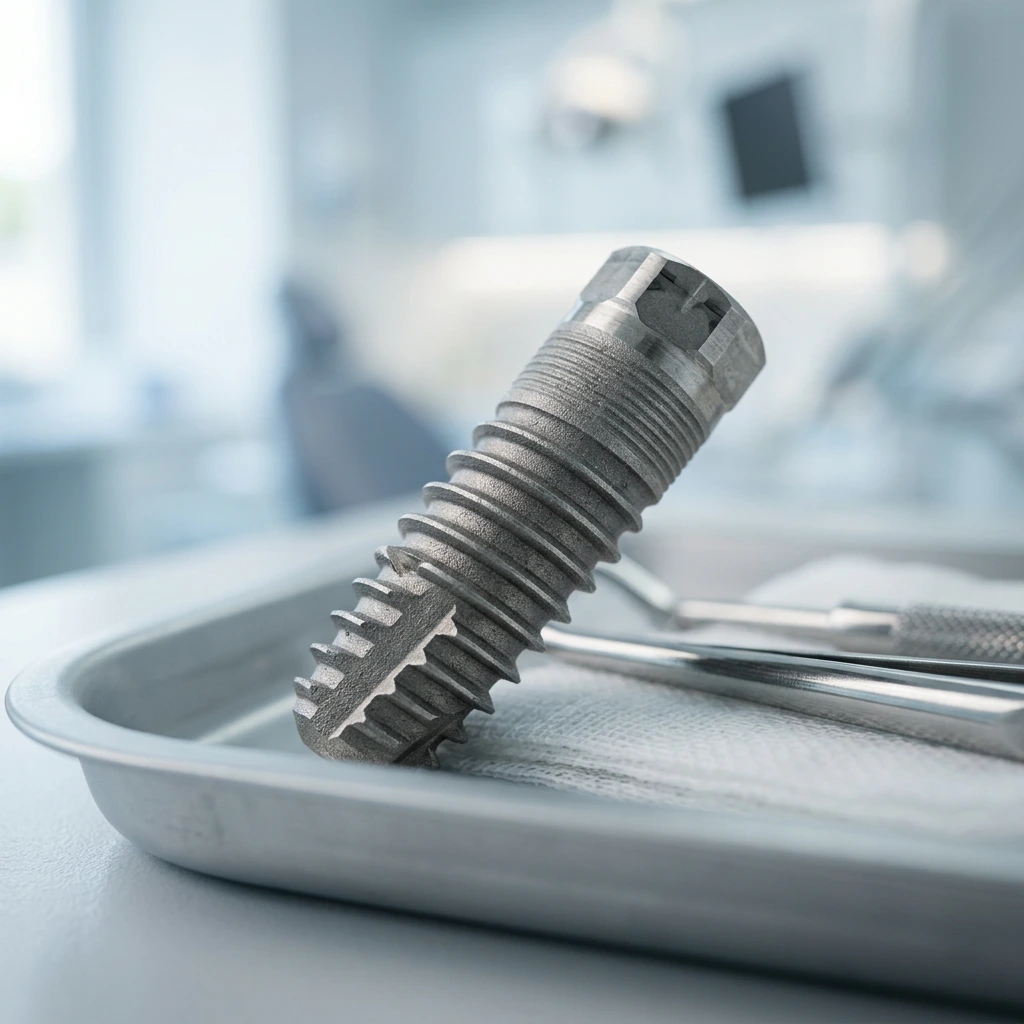
Many people confuse the implant with the prosthesis (the visible tooth). In fact, the implant is the substitute for therootof the tooth.
Imagine a house: the implant is the concrete foundation buried in the ground, while the crown is the visible part of the house. Without a solid foundation, any structure above it will fail.
The Anatomy of Success:
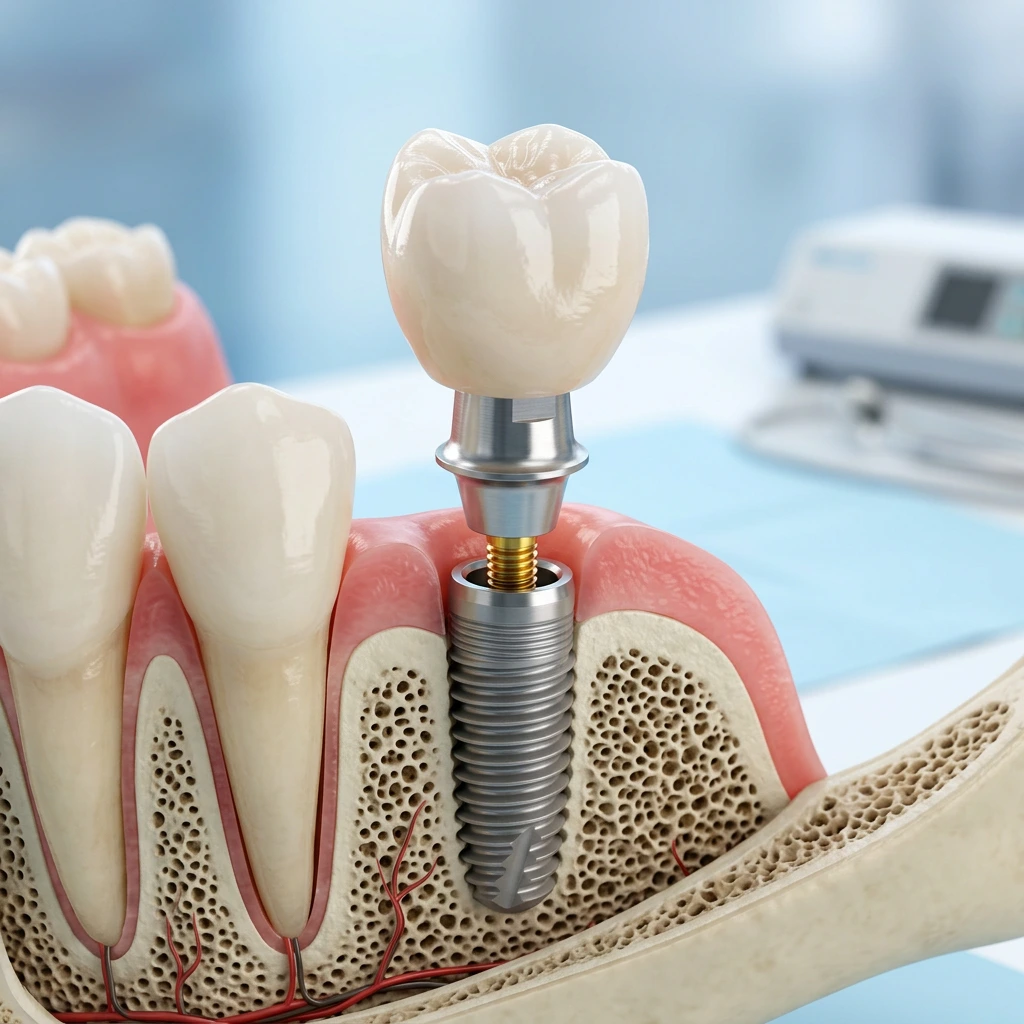
- The Implant:A biocompatible titanium post inserted into the bone.
- The Abutment:The piece that connects the implant to the crown.
- The Prosthesis (Crown):The artificial tooth, custom-made to match your natural teeth.
Practical Tip: Titanium is used because the human body does not recognize it as a foreign object, allowing the bone to literally grow "attached" to it.
2. The Science of Osseointegration: The Secret of Fixation
What differentiates an implant from a regular denture is theosseointegration. This is the biological process where the bone of your jaw or maxilla grows around the grooves of the titanium pin.
Why is this vital?When you lose a tooth, the bone in that area loses its function and begins to be reabsorbed by the body (bone atrophy). The implant "tricks" the body by sending chewing stimuli to the bone, which preserves its facial structure and prevents that "aged" appearance caused by tooth loss.
The Test of Time:At Fuchs Dentistry, we have been following patients with healthy implants for over 15, 20 years. The secret? Perfect integration and preventive care.
3. The Step by Step: From Diagnosis to the New Smile
Replacing a lost tooth does not happen overnight, but the result is worth every second of waiting.
Phase 1: Digital Planning and Diagnosis
You don't do an implant without a "map". We use imaging tests to check bone density and the exact positioning of the nerves.
Phase 2: The Surgical Procedure
Contrary to what many think, it is a painless procedure under local anesthesia. The pin is installed and the waiting period begins.
Phase 3: The Healing Period (3 to 6 months)
Here, biology does the heavy lifting. The implant becomes part of your body.
Phase 4: Prosthetic Rehabilitation
After biological fixation, we install the final crown. The result? You can eat what you like again, without fear of the tooth "coming loose."
4. Common Challenges (and how to overcome them) (H2)
Many patients postpone the dream of an implant due to fear of technical challenges. Here’s how we address the main ones:
- Lack of Bone:If you lost the tooth a long time ago, we use bone grafts. At Fuchs Clinic, we apply minimally invasive techniques that make the process simple and accessible.
Fear of Surgery:We create a welcoming environment and, if necessary, use sedation so you feel absolutely nothing.
Cost:The implant is not an expense; it is an investment in health. We avoid unnecessary tests and focus on the solution that fits your budget, without compromising on titanium quality.
5. The Value Equation: Why is the Implant the Best Investment?
Applying theValue Equation by Alex Hormozi, the dental implant outperforms any other option (like bridges or dentures):
- Dream Outcome:Being able to eat a barbecue or smile for a photo without hesitation.
- Perceived Likelihood:Success rates above 95% in our clinic.
- Time Delay:Although it takes a few months, the durability is for a lifetime.
- Effort & Sacrifice:Post-operative care is almost identical to that of a natural tooth (brushing and flossing).
Conclusion: Exponential Value.The cost ofnotgetting the implant (loss of more teeth, gastric problems due to poor chewing, loss of self-esteem) is infinitely greater than the investment in treatment.
Ready to regain your confidence?
If you want to understand whether your case needs a graft or if you can have an immediate implant, we can help. At Fuchs Dentistry, we carry the legacy of pioneering in implantology to offer you the safest and most modern options.
[Click here to schedule an evaluation and discover the shortest path to your new smile]
Did you like this content? Share it with someone who needs to overcome their fear of smiling again!